

1. Introduction
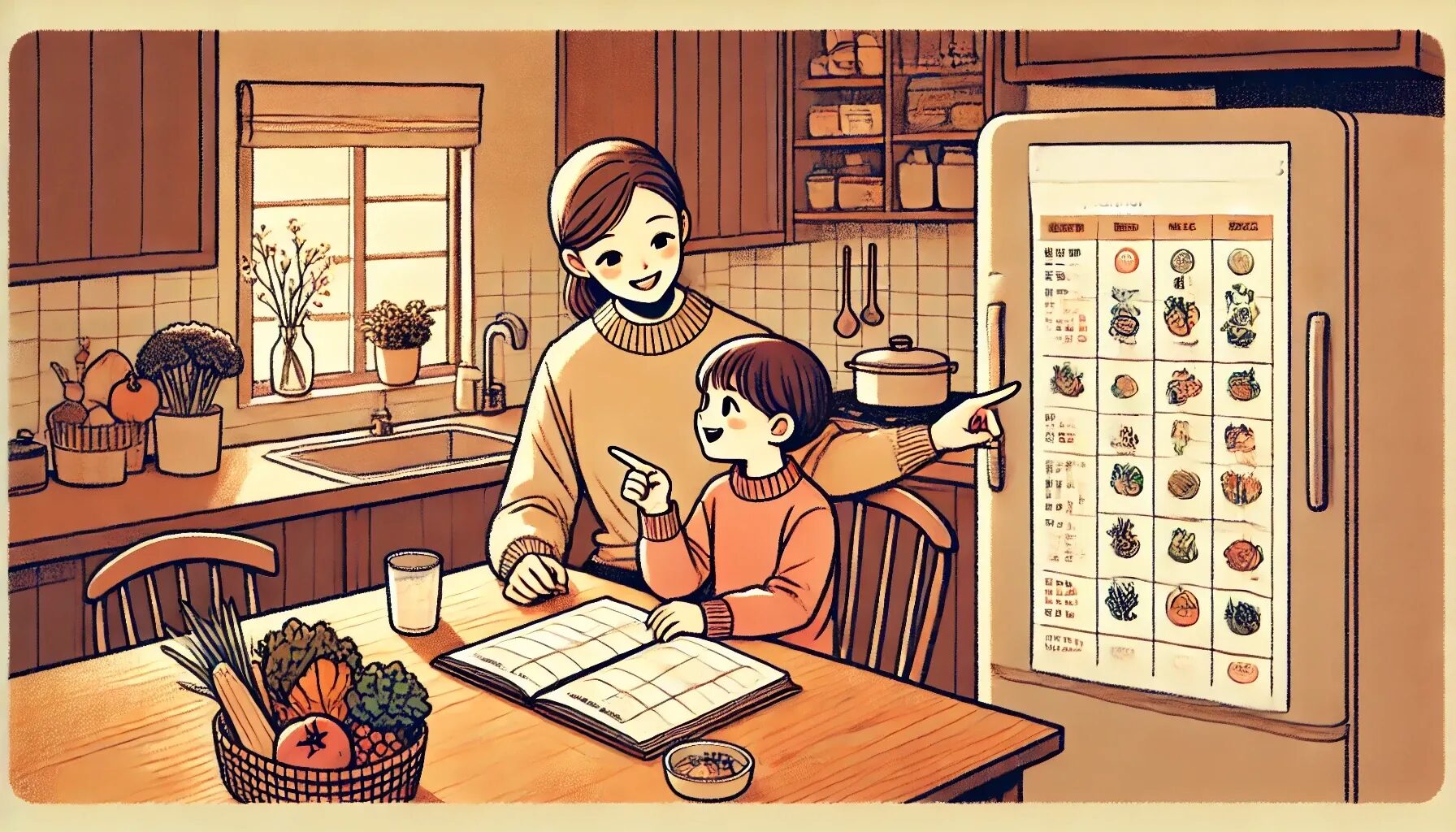
Have you ever worried “My child leaves food uneaten even though I worked hard to prepare it…” or “They only eat what they like, and I’m concerned about their nutritional balance…”? Actually, when children participate in menu planning, they become more motivated to eat and leave less food uneaten. When they choose the menu themselves, they’re more likely to think “I want to try eating this!” and naturally become more interested in meals. In this article, we’ll introduce ways to create meal plans enjoyably with your children while reducing food waste.

2. Practical Points and Examples
- “Why does menu planning reduce food waste?”
When children participate in menu planning, you can expect the following benefits:
- They’re more motivated to eat meals they chose themselves
- It becomes an opportunity to think about balance, not just their favorite foods
- They become interested in cooking and less resistant to ingredients
Tip: Create a pattern of “I’ll eat it because I chose it” to make mealtimes something to look forward to!
- “How to plan menus enjoyably with children”
Here are specific ways to work on menu planning together.
- Hold a weekly “menu meeting”
- Ask children “What would you like to eat?” and let them make requests
- Make decisions together with parents while considering nutritional balance
- Adopt the “Favorite Menu + New Challenge Menu” approach
- Combine favorite dishes with menus using new ingredients
- Example: “Hamburger + Vegetable Soup” “Curry + Salad”
- Set themes for each day of the week
- Monday: Pasta Day (Meat Sauce or Napolitan)
- Wednesday: Soup Day (Vegetable Soup or Stew)
- Friday: Request DAY (Children choose their favorite)
Tip: Balance between “parts children can freely choose” and “parts parents adjust”!
- “Consider nutritional balance while incorporating children’s preferences”
It’s important to ensure meals are nutritionally balanced, not just including children’s favorites.
- Add vegetables to favorite menu items
- “Omurice + Mini Salad”
- “Hamburger + Sautéed Spinach”
- Find cooking methods that make food easier to eat
- If they don’t like vegetables, make them into soup to bring out the sweetness
- If they don’t like fish, combine it with cheese or cream
Tip: “New ingredients become more acceptable when eaten together with favorite foods!”
- “After deciding the menu, help with cooking too!”
When they actually help make the menu they chose, they become even more motivated to eat.
- Tasks even young children can do
- Wash rice, make rice balls
- Wash vegetables, help with plating
- Tasks they can do once they get used to helping
- Crack and beat eggs
- Cook pancakes and hamburgers
Tip: “Being involved in cooking increases interest in meals and reduces food waste!”
3. Important Points and Tips
- “Don’t force them to eat”
Create an atmosphere of “Let’s try a little!” rather than “You must eat this!”
- “Prioritize making it fun”
Make meal planning feel like a game to avoid it becoming stressful.
- “Respect their opinions while parents guide”
Don’t accommodate all children’s wishes, but make decisions while considering nutritional balance.
4. Summary and Next Steps
When children participate in menu planning, their interest in meals increases and food waste decreases! Let’s start with:
- Hold a weekly “menu meeting”
- Set daily themes and plan balanced menus
- Have them help with cooking to increase their motivation to eat
Planning meals together with your children will make your daily dining table more enjoyable!