

1. Introduction
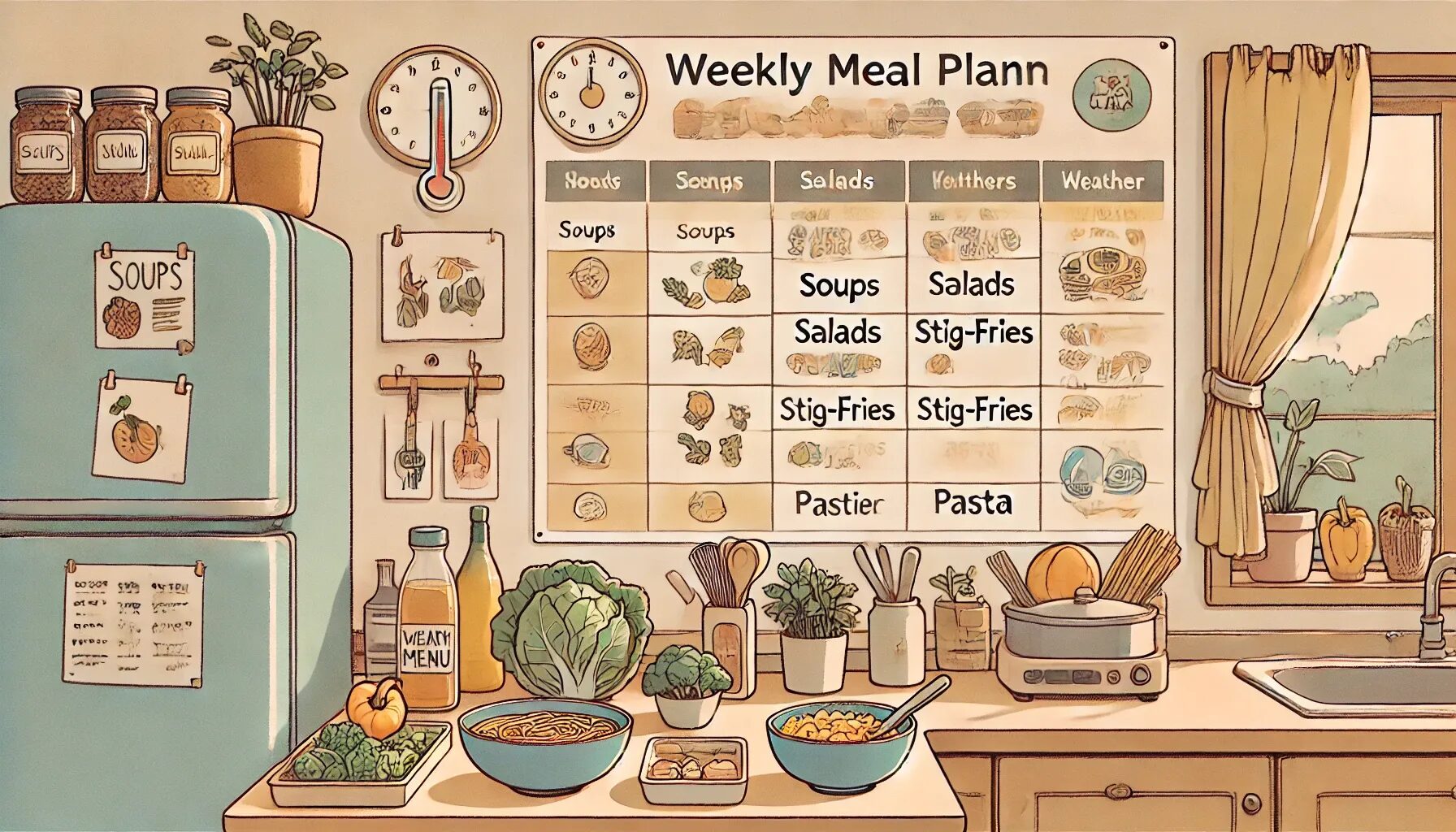
What we want to eat often changes depending on the weather and temperature. On hot days, we crave light meals, while on cold days, we long for warm dishes. In this article, we’ll introduce a flexible method for planning a week’s menu based on weather and temperature. By adapting your meal plan to the climate, your daily meals will become more enjoyable and comfortable.
2. Practical Points and Specific Examples
- **”Prepare Different Types of Dishes Based on Temperature”**Planning your menu becomes smoother when you decide on types of dishes based on temperature in advance. For example, on hot days, prepare cold dishes like “chilled udon,” “cold pasta,” or “chicken salad bowls,” while on cold days, prepare warm dishes like “hot pot,” “soup pasta,” or “stew.” If you stock up on variations of both cold and hot dishes beforehand, you can simply choose based on the day’s temperature.
- **”Prepare Ingredients While Checking the Weather Forecast”**When planning your weekly menu, check the weather forecast and prepare ingredients suitable for temperature changes. It’s convenient to check the weekend forecast and stock up on temperature-appropriate ingredients like “tomatoes and cucumbers for hot days” and “root vegetables and mushrooms for cold days.” For example, if the first half of the week will be hot, plan for “cold Chinese noodles” or “chilled soups,” and if the latter half will be cold, consider “pot-au-feu” or “pork miso soup.”
- **”Respond Flexibly with Ready-to-Use Staple Ingredients”**Make good use of staple ingredients to handle unexpected weather changes. For instance, frozen udon, canned tomatoes, and tofu can be quickly used in various dishes. You can use them for chilled udon or tomato salad on hot days, or tomato soup and stewed dishes on cold days, allowing for flexible meal planning regardless of weather.
3. Important Points and Tips
When planning weather-appropriate menus, the key is to combine ingredients with long shelf life with those that need to be used quickly. Practice storage methods that consider shelf life, such as cutting and refrigerating ingredients for hot days or freezing vegetables for cold days. Also, consider appetite changes due to weather and incorporate a good balance of light and rich dishes to keep the whole family satisfied.
4. Summary and Next Steps
Flexible meal planning based on weather and temperature makes daily meals more enjoyable. For your next meal plan, check the weather forecast and temperature, and try to incorporate a good balance of cold and hot dishes. Climate-appropriate meals will help maintain your family’s health and create a more comfortable dining experience!